
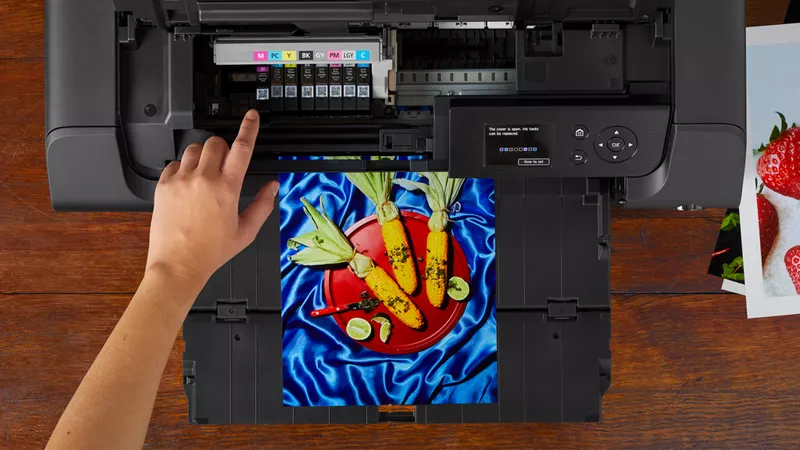
1.Adjustment of Printing Settings: Color variation may result from incorrect printing settings such as brightness, contrast, saturation, and color intensity. These settings should be adjusted correctly according to the printed media.
2. Paper Quality: The type of paper used in printing can affect how ink is absorbed and its impact on colors. It is preferable to use high-quality papers that suit the type of ink being used.
3. Environmental Factors: Changes in humidity and temperature can affect the performance of ink and the printer, leading to differences in printed colors.
4. Cleaning Printer Heads: Accumulation of ink or dirt on printer heads may distort colors or result in unwanted lines. Printer heads should be cleaned regularly to maintain color quality
5.Ink Quality: The quality of the ink used plays a significant role in determining color quality. High-quality ink compatible with the printer should be used to achieve accurate and vibrant colors
6.Color Compatibility: Colors may be incompatible with each other, leading to different colors when printed. Ensuring compatibility of colors used in the design before printing is essential.